
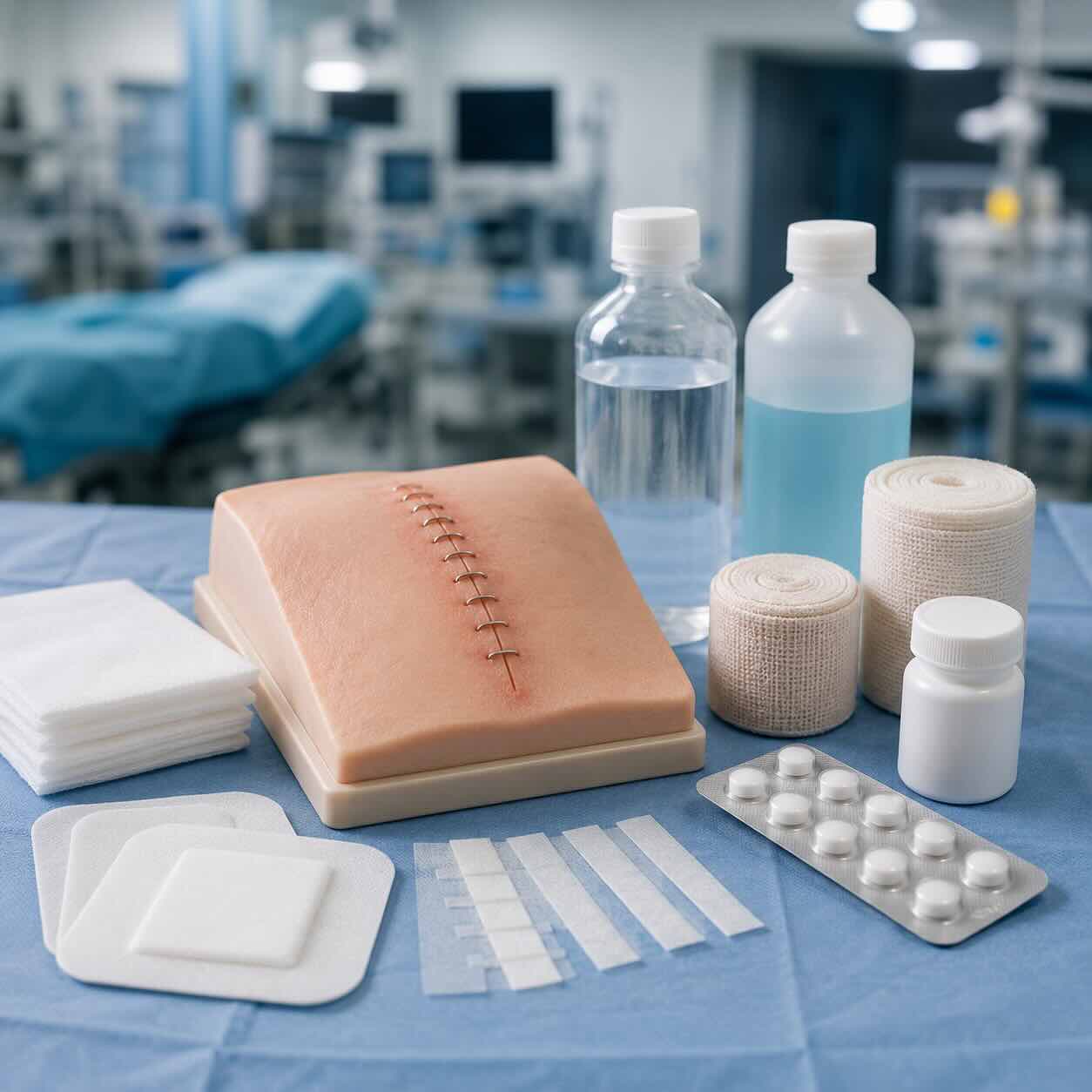
A surgical incision normally causes some tenderness, mild swelling, and limited redness during the first stages of healing, but increasing pain, spreading redness, purulent drainage, wound separation, or systemic illness can indicate a surgical site infection that needs medical assessment.
A surgical site infection (SSI) develops in the area where an operation was performed and may involve only the skin, extend into deeper soft tissues, or affect an organ, body cavity, implant, or other structure involved in the procedure. Treatment depends on how deep the infection extends and whether infected fluid, dead tissue, or implanted material is present, because antibiotics alone are not sufficient for every infected surgical wound.
Warning Signs of a Surgical Site Infection
Early postoperative discomfort should gradually improve. Infection becomes more concerning when the wound begins moving in the opposite direction after an initial period of recovery. The change over time is often more informative than a small amount of redness or soreness immediately after surgery.
Common warning signs include:
- Redness that is expanding beyond the incision rather than fading
- Increasing warmth or swelling around the surgical site
- Pain or tenderness that becomes stronger after previously improving
- Thick, cloudy, yellow, green, or foul-smelling drainage
- Pus collecting beneath or around the incision
- New bleeding or persistently saturated dressings
- Separation of previously closed wound edges
- Fever, chills, or a general feeling of becoming unwell
Redness spreading through the surrounding skin may represent cellulitis, an infection involving the skin and deeper tissues. A localized pocket of pus is an abscess. These findings matter because cellulitis can often require systemic antibiotics, while an abscess usually requires drainage in addition to decisions about antimicrobial treatment.
Superficial, Deep, and Organ-Space Infections
A superficial incisional infection involves the skin and subcutaneous tissue around the incision. Deep incisional infection extends into deeper soft tissue, including fascial and muscle layers. An organ-space infection occurs below those layers in an organ or anatomical space involved in the surgery. Deep infections may produce less obvious skin change than superficial infections, particularly after abdominal, orthopedic, or other procedures involving substantial tissue depth.
The World Health Organization guidelines on surgical site infection address infection prevention throughout the preoperative, operative, and postoperative periods, reflecting the fact that SSI risk is influenced by the complete surgical process rather than wound care alone.
When the Wound Needs Prompt Assessment
A postoperative wound should be evaluated promptly when drainage becomes purulent, redness is rapidly expanding, pain is severe or escalating, or the wound begins to open. Wound dehiscence means partial or complete separation of wound edges that were previously brought together. Superficial separation requires assessment for infection and healing problems, while disruption of deeper abdominal fascia can become a surgical emergency.
Urgent or emergency assessment is especially important when wound changes occur with:
- High fever or shaking chills
- Rapid heart rate or breathing
- Confusion or unusual drowsiness
- Low blood pressure, fainting, or marked weakness
- Severe pain out of proportion to the visible wound
- Rapidly spreading swelling or discoloration
- Visible deeper tissue or abdominal contents through an opened wound
An infection that triggers a dangerous whole-body response can progress to sepsis, which requires immediate medical treatment. A patient who appears systemically ill should therefore not wait for a routine postoperative appointment simply because the original problem began at a surgical incision.
How Antibiotics Are Used for Surgical Wound Infections
Antibiotic treatment is selected according to the surgical site, infection severity, likely organisms, previous antibiotic exposure, allergies, local resistance patterns, and culture results. The NICE surgical site infection guideline recommends choosing an antibiotic that covers the organisms likely to be responsible when SSI with cellulitis is suspected, while taking microbiological findings and local resistance into account.
Many of the antibiotics used for surgical site infections, along with their generic equivalents, may also be sourced through a certified international Canadian pharmacy, offering a wider choice of commonly prescribed products and dosage forms within the same therapeutic category.
For infections following clean operations on areas such as the trunk or extremities, common bacteria include Staphylococcus aureus and streptococci. Depending on the clinical situation, clinicians may use agents from groups that include first-generation cephalosporins or antistaphylococcal penicillins when methicillin-susceptible staphylococci are expected.
Examples: Ancef (cefazolin), Keflex (cephalexin), nafcillin, and oxacillin.
Different treatment may be required when there is a risk of methicillin-resistant Staphylococcus aureus (MRSA). Previous MRSA infection or colonization, recent hospitalization, recent antibiotic exposure, and other clinical factors can influence this decision. Medicines active against MRSA may include vancomycin, linezolid, or other agents selected according to the severity and site of infection.
Examples: Vancocin (vancomycin), Zyvox (linezolid), Cubicin (daptomycin), and Teflaro (ceftaroline).
Operations involving the gastrointestinal tract, perineum, or other areas with mixed bacterial flora can require broader coverage against gram-negative organisms and anaerobic bacteria. The Infectious Diseases Society of America guidance on surgical site infections emphasizes matching antibiotic coverage to the type and anatomical location of the operation instead of applying one standard antibiotic regimen to every infected incision.
Examples: Zosyn (piperacillin/tazobactam), Rocephin (ceftriaxone) with Flagyl (metronidazole), Invanz (ertapenem), and Merrem (meropenem).
Why a Culture May Change the Antibiotic?
If pus or significant wound drainage is present, a sample may be sent for microbiological culture and susceptibility testing. Initial treatment is sometimes empirical, meaning it is selected according to the most likely organisms before laboratory results are available. Once the organism and its susceptibility pattern are known, therapy can be narrowed or changed.
This is particularly useful when:
- The infection is deep or severe
- The patient has recently received antibiotics
- MRSA or another resistant organism is possible
- The infection has failed to improve with initial treatment
- There is an implant or prosthetic material near the infection
- The patient is immunocompromised
Patients should not start leftover antibiotics or use another person’s prescription for an infected incision. An inappropriate drug may fail to cover the responsible organism, obscure culture results, or unnecessarily increase antibiotic exposure.
Why Antibiotics Alone May Not Be Enough?
One of the most important principles in infected wound treatment is source control. If pus is trapped beneath the incision, simply delivering an antibiotic through the bloodstream may not adequately eliminate the infected collection. The wound may need to be opened sufficiently to allow drainage, with removal of selected sutures or staples when clinically appropriate.
The MedlinePlus overview of surgical wound infection treatment describes a combination of antibiotics, wound opening, drainage, culture, cleansing, and removal of infected or dead tissue when required.
Removal of nonviable or contaminated tissue is called debridement. The amount and method depend on wound depth, tissue viability, blood supply, and the extent of infection. A small superficial wound may require limited treatment, while a deep postoperative infection can require operative exploration and more extensive debridement.
Wound Care After an Infection Is Identified
Once an infected incision has been opened or drained, wound care may continue for days or weeks while healthy tissue fills the defect. Some wounds are deliberately left open instead of being immediately reclosed so that drainage can continue and infection is not trapped beneath the skin. This process is known as healing by secondary intention, in which granulation tissue develops and the wound gradually contracts and epithelializes.
Home wound care should follow the surgeon’s instructions, because dressing type and cleansing requirements vary substantially according to the procedure and whether the wound remains closed, partially open, packed, or connected to a drain.
Basic principles usually include:
- Clean the hands before and after wound care. Supplies should be prepared before the old dressing is removed.
- Use the recommended cleansing method. Normal saline or water may be appropriate depending on the wound and postoperative stage.
- Apply a fresh dressing as instructed. A used dressing should not be reused.
- Monitor the amount and character of drainage. Increasing volume, pus, blood, or odor should be reported.
- Avoid unapproved substances. Hydrogen peroxide, rubbing alcohol, iodine, powders, herbal products, and topical antibiotics should not automatically be placed into a surgical wound.
- Protect the incision from unnecessary soaking and friction. Bathing, swimming, and exercise restrictions depend on the operation and wound status.
The American College of Surgeons surgical wound care program provides patient-focused instructions for dressings, wound cleaning, drains, and signs that should be reported to the surgical team.
Reducing the Risk of Another Surgical Site Infection
Some SSI risk comes from the operation itself, but several modifiable factors influence healing and infection risk. Poorly controlled blood glucose, smoking, obesity, impaired circulation, malnutrition, immunosuppressive treatment, and inadequate wound care can interfere with normal tissue repair.
Hospital prevention measures also matter. The SHEA Compendium of Strategies to Prevent Healthcare-Associated Infections includes current expert recommendations for SSI prevention in acute-care hospitals, covering measures such as appropriate antimicrobial prophylaxis, operative skin preparation, glucose management, and standardized infection-prevention practices.
After discharge, the most useful patient actions are straightforward: follow the procedure-specific dressing instructions, keep scheduled postoperative appointments, avoid manipulating the incision unnecessarily, control relevant chronic conditions, and report worsening symptoms before a superficial problem progresses into a deeper infection.
What to Watch During Recovery?
A healing surgical wound should generally become less painful, less swollen, and easier to manage over time. The appearance does not have to be perfect, and minor tenderness or limited drainage can occur depending on the procedure. The important warning pattern is deterioration instead of improvement.
Contact the surgical team when there is new or increasing redness, swelling, pain, drainage, odor, wound separation, or fever. Seek urgent care when infection is accompanied by rapid systemic deterioration, severe pain, confusion, breathing changes, extensive tissue discoloration, or deep wound opening. Early assessment allows clinicians to determine whether the problem needs observation, antibiotics, culture, drainage, debridement, imaging, or another surgical procedure instead of allowing an initially localized infection to progress.
Postoperative Wound Monitoring and Surgical Support
Recovery after surgery continues well beyond the operating room, and careful observation of the incision can help identify complications before they become more difficult to treat. At Humble Surgical Hospital in Humble, Texas, patients undergoing surgical procedures receive postoperative instructions that may address wound care, medication use, activity, dressing management, and follow-up with the treating physician. Patients should pay particular attention to changes that develop after an incision initially appears to be healing normally. New drainage, increasing redness, localized warmth, swelling, worsening tenderness, wound separation, or fever may require direct examination by the surgical team. Depending on the findings, evaluation can include inspection of the incision, collection of wound material for culture, adjustment of antibiotic therapy, drainage of infected fluid, or additional wound treatment.
Because Humble Surgical Hospital works across multiple surgical specialties, postoperative wound concerns can be reviewed in the context of the original procedure, the tissues involved, implanted materials, and the patient’s expected recovery course.